

Tires
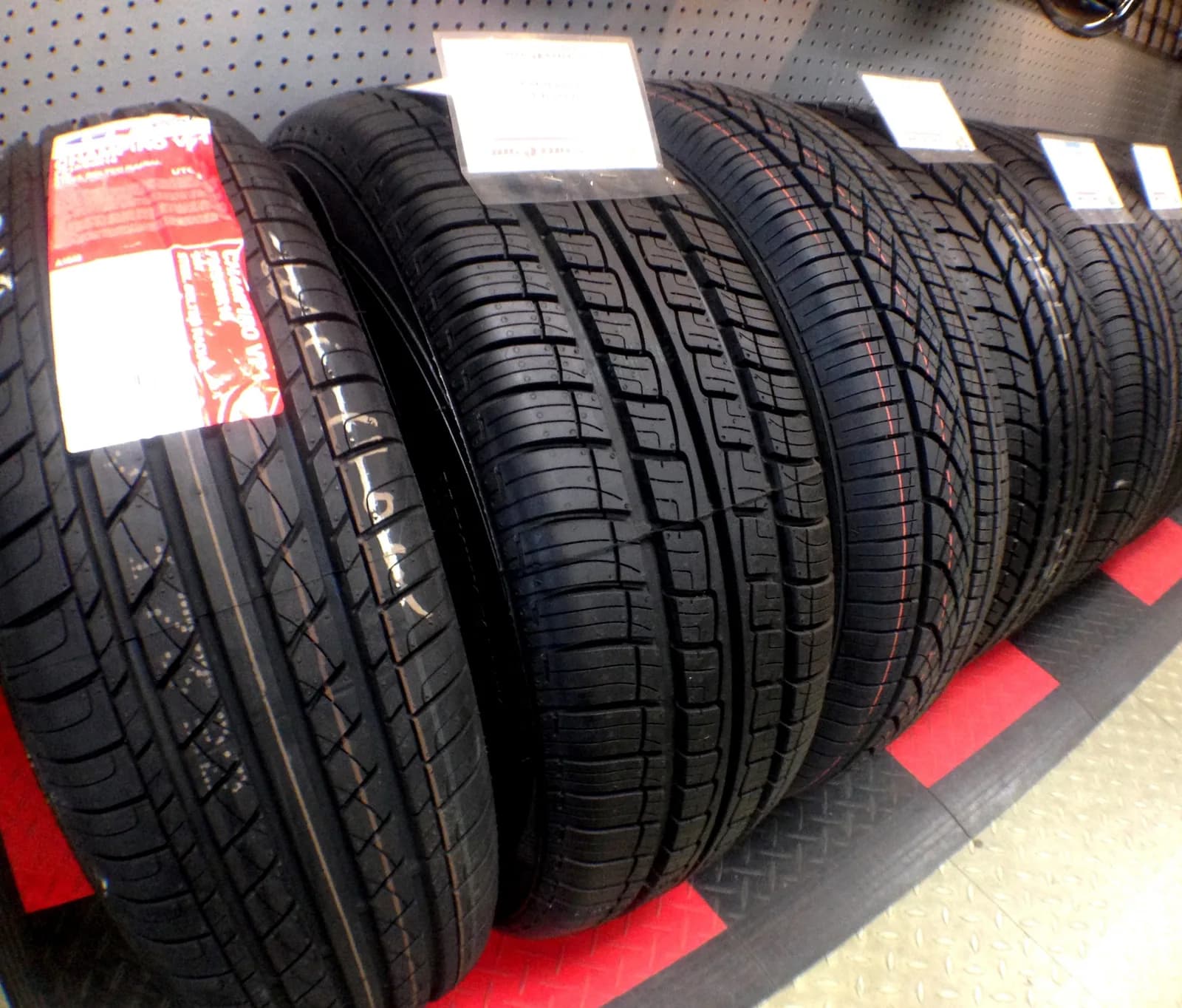
Everything on the road rides on rubber. Tell us how and where you drive, and your local Big O team will match the right set to your vehicle, your budget and what BC weather throws at you.
The heart of what we do
Tires are the core of Big O.
They may not seem all that exciting at first glance, but few things contribute more to the comfort and safety of your ride than the rubber you choose for your vehicle.
As vehicles keep evolving, tire manufacturers around the world work day in and day out, researching and testing new compounds, tread patterns and styles. All of it goes toward safer handling, a more comfortable ride, and better performance and fuel efficiency. If those things matter to you, come and see us, because they matter to us too.
How we work
We won't just sell you a set of tires.
We work with you to understand your driving, then make the recommendation that is best for you and your vehicle. In other words, we earn your trust, because at Big O, trust is a BIG deal.
01
Your driving style
How you drive shapes the right tire. We start with the way you actually use your vehicle, not a generic best seller off the shelf.
02
Your vehicle
The type of vehicle you drive narrows the field fast. We match the recommendation to what your vehicle is built to do.
03
Where and when you drive
City, highway, coast, valley or Interior, and the season you drive it in. Where and when you travel decides a lot.
04
Your budget
And of course, your budget. We make honest recommendations that fit it, then back them up with current manufacturer rebates.
Decode the sidewall
What all those numbers mean.
P215 / 65 / R15 sounds a little like a quarterback shouting out a play at the line of scrimmage. All those numbers and specs moulded into the sidewalls of your tires can be confusing, but they all matter.
Your local Big O team can walk you through exactly what they mean for your vehicle and read them with you right there in the shop.
 A quick guide to what each number on your sidewall means.
Find your size
Where to find your vehicle's tire size.
Your stock tire size is listed on the vehicle information placard. Manufacturers put it in different spots, but these are the most common.
01
Driver door
Driver side front or rear door, or the door jamb.
02
"B" pillar
Driver or passenger side "B" pillar, the post closest to the door hinge.
03
Passenger door
Passenger side front or back door.
04
"C" pillar
Driver or passenger side "C" pillar.
05
Fuel filler door
Inside or around the fuel filler door.
06
Trunk or hatch
The trunk or hatch area of the vehicle.
07
Glove box
Glove box or centre console.
08
Sun visor
On the driver or passenger sun visor.
Not sure what you're looking at? Bring the vehicle in. Reading a sidewall and matching it to the right tire is exactly what we do every day.
Winter vs All-weather vs All-season
Tire comparison guide. Which tire fits how, and where, you drive.
All-season
tires
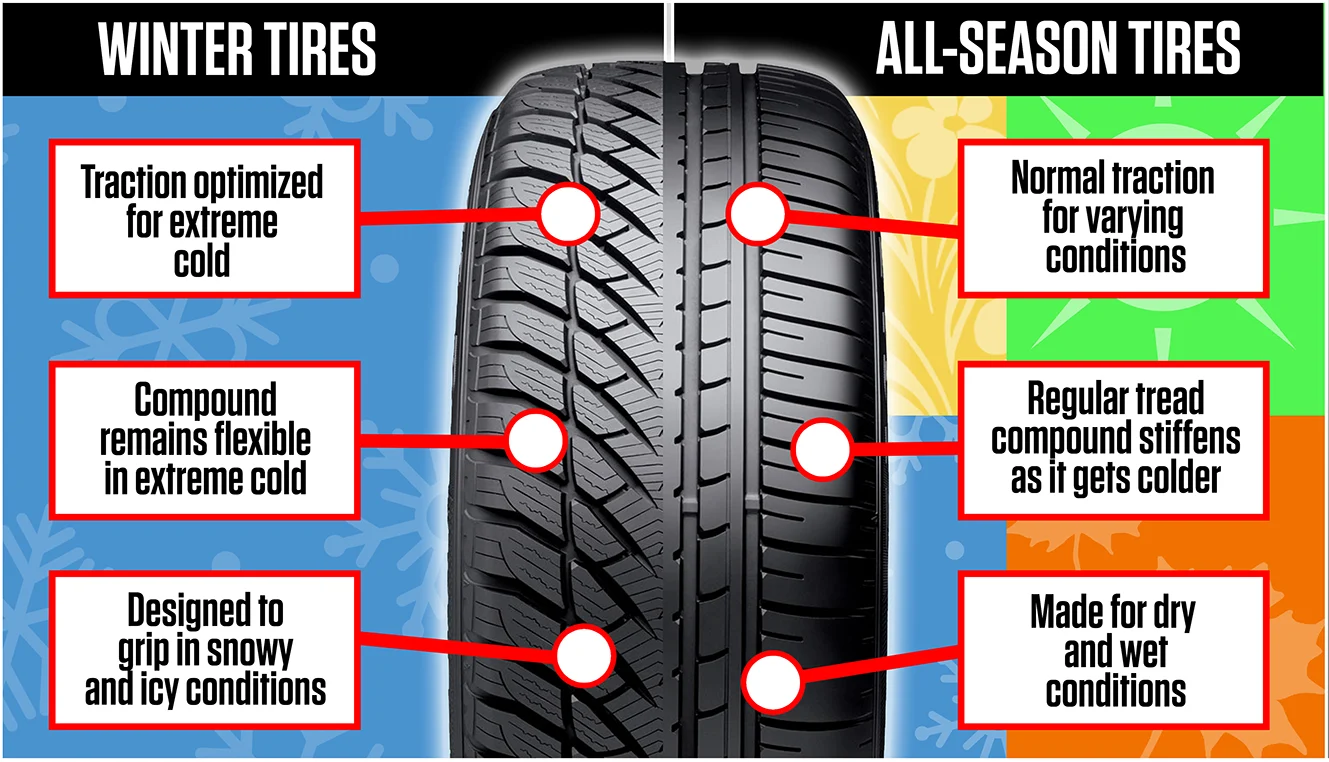
Designed for comfort, longer tread life and optimum performance in mild, dry or moderate wet conditions, with temperatures well above 7°C.
All-weather
tires
Designed for a variety of conditions including heavy rain and milder winters with light to moderate, fast-melting snow and slush.
Winter
tires
Designed for optimum performance in harsh winter conditions, including heavy snow and ice, and temperatures persistently below 7°C.
Good to know
The brands we carry, and the right season.
The brands we carry
Michelin, Bridgestone, Goodyear, BFGoodrich, Continental, Pirelli, Toyo, Yokohama, Firestone, Hankook and more, with current manufacturer rebates through the year.
See current rebates
Winter or all-season?
BC roads change fast between the coast, the valley and the Interior. Your local store will help you choose based on where you actually drive.
Find your store
Tires
Let's find the right set for you.
Bring your vehicle to your local Big O. We'll consider how, where and when you drive, and your budget, then recommend the tires that are best for you. It's how we earn your trust.